MATH 232 — Applied Linear Algebra
Course Information
| Instructor | Tareq Uz Zaman — tarequzz@sfu.ca |
|---|---|
| Term | Fall 2026 |
| Computing | Python |
| Lectures | Mon / Wed / Fri, 1:30–2:20 PM (Room SRYC3170) |
Course Description
Linear equations, matrices, determinants. Introduction to vector spaces and linear transformations and bases. Complex numbers. Eigenvalues and eigenvectors; diagonalization. Inner products and orthogonality; least squares problems. An emphasis on applications involving matrix and vector calculations.
Prerequisites
MATH 150 or MATH 151 or MACM 101, with a minimum grade of C−; or MATH 154 or MATH 157 with a grade of at least B. Students with credit for MATH 240 may not take this course for further credit.
Textbook and Software
Introduction to Linear Algebra for Science and Engineering, 3rd edition, by Daniel Norman and Dan Wolczuk. All section and exercise references follow this edition.
Some assignments include a computing component, done in Python. These look at the same linear algebra from a computational angle, usually with matrices larger than you would work through by hand. Python runs in any web browser through the university's cloud notebook service, so there is nothing to install, and solutions are submitted through Canvas.
Grading Scheme
The grade breakdown is as follows. There is no alternative weighting.
| Component | Weight | Notes |
|---|---|---|
| Online assignments | 6% | All are counted |
| Computing assignments | 12% | All are counted |
| Quizzes | 12% | Lowest score is dropped |
| Midterm 1 | 15% | In class |
| Midterm 2 | 15% | In class |
| Final exam | 40% | December exam period |
A grade of C− or higher also requires a passing average on the exams. The exact requirement is stated in the official syllabus.
Course Policies
The official syllabus on Canvas is the authoritative document for this course. It sets out the rules on missed assessments and late work, academic integrity, the use of generative AI tools, accommodations through the Centre for Accessible Learning, religious accommodation, calculators, and the grade appeal process. Read those there rather than relying on this page. If any of them affect you, talk to me early rather than after a deadline has passed.
Equity, Diversity, and Inclusion
As your instructor, I want this course to be a place that supports a diversity of thoughts, experiences, and identities, including gender identity, race, religion, age, national origin, sexual orientation, neurodiversity, and ability. Your participation matters to me. If there is anything I can do to better support your learning, please let me know, ideally early in the term.
As a student, I expect you to review and follow the SFU Student Conduct Policy, and to be aware of the supports that SFU makes available to you.
The Department of Mathematics has an Equity, Diversity, and Inclusion Advisory Group, a committee that works to keep the department a safe, respectful, and inclusive place to work and learn. You are welcome to contact the group with any concerns or ideas relating to equity, diversity, and inclusion.
Course Schedule
September
October
November
December
This page is a summary for current and prospective students. The official syllabus on Canvas is the authoritative version of the course information, and it governs wherever the two differ. The schedule may change during the term, and any changes will be announced in class.
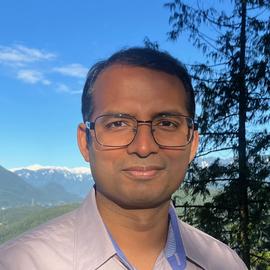
Tareq Uz Zaman
Researcher in Scientific Computing
I work on numerical methods and scientific machine learning for large-scale scientific computing.